Newsletter Issue #15
"Reviving the Art of the Short Story."
Monthly Dispatch
Werewolf
Winter
Literary Horror & Weird Fiction
May 26, 2026

From The Editor
Editor's Note - Psylla, The Little Flea
The last days of May carry a particular weight. The ground has thawed but refuses to forget what pressed it down through the long months. In the mornings there is still a residue of cold on every surface — a thin film that burns off by noon but leaves its mark, the way a fever breaks but the body remembers the temperature it held. I have been at my desk watching this transition, and what I notice is that the season does not end. It becomes something else. The cold does not leave. It changes its address.
This issue concerns itself with erosion — the kind that works from the inside. Not the dramatic collapse, not the sudden break, but the slow dissolution of what a person believes themselves to be. Fear does this work more thoroughly than any external force. It enters through a fissure you did not know existed, and by the time you notice the damage, the shape of who you were has already been replaced by something unfamiliar.
The door is open. What waits inside does not pretend to be comfortable.
— Psylla, The Little Flea, Werewolf Winter
Short Fiction
The Corrosion of Self
Fear does not only threaten the body. Its true work happens elsewhere.
Consider the moment dread arrives in a story. The writer has a choice: show us the monster, or show us the person who is watching it arrive. Both approaches have their power, but one reaches deeper. The monster can be defeated, can be escaped, can be killed. What the monster does to the flesh is temporary, recoverable, a wound that heals into a scar. But what dread does to the mind — that is where horror finds its lasting home.
The erosion follows a recognizable pattern. First comes the recognition that something fundamental has changed. The familiar doorway no longer leads to the familiar room. The loved one's face no longer reflects the person you know. The mirror shows a stranger wearing your clothes. This is the moment when the self begins to dissolve — not spectacularly, not dramatically, but molecule by molecule, certainty by certainty.
What remains after the self has been worn away?
That is what good weird fiction asks us to consider. Not what we would do in the presence of a monster, but who we would become after the monster has finished with us. Not how we would fight, but whether we would recognize ourselves if we survived. The corrosive power of fear is that it forces this question: what part of you is essential, and what part was never real?
The stories that stay with us are not the ones about what happened. They are the ones about what remains after what happened has passed. They are the ones that understand that the true horror is not the thing that comes through the door, but the person who is no longer there to answer it.
This is what Werewolf Winter explores. Not the monsters. Not the external threats. The dissolution. The erosion. The slow, quiet way that a human being can become unrecognizable to themselves.
If you want more of this work, subscribe to the Werewolf Winter newsletter. We send free stories and genre commentary, periodically.
On the Craft
Craft Note · Issue #15
The Architecture of Dread
The most durable horror is structural. It lives not in the revelation but in the architecture that precedes it — the careful arrangement of rooms the reader must pass through before arriving at the door they were never meant to open. Ligotti understood this. In stories like “The Last Feast of Harlequin,” the dread does not arrive with the discovery. It has been present since the first paragraph, built into the narrator's voice, the landscape, the quality of attention given to small details that should not matter but unmistakably do.
The architecture of dread depends on a precise relationship between knowing and not-knowing. The reader must sense that the world of the story is wrong — not because the writer has told them so, but because the sentences themselves carry the weight of something withheld. Barron achieves this through density: his prose accumulates mass until the reader feels physically compressed. Blackwood achieves it through negative space: the wilderness in “The Willows” is frightening not because of what inhabits it but because of how little the narrator is permitted to perceive.
The lesson for the short fiction writer is this: tension is not suspense. Suspense asks what will happen. Tension lives in the space between what the reader already senses and what the story refuses to confirm. Build the rooms first. Make them feel specific, weighted with the residue of something that happened before the story began. Then let the reader walk through them, and trust that what they carry is enough.
The reader should feel the dread before they can name it — if they ever can.
Lore & Mythos
On the Erosion That Follows Recognition
There is a moment in every cycle when the self recognizes what it is becoming and cannot prevent the change. The Recurrence does not ask permission. It enters through the space between what you remember and what you have forgotten, and it does its work in the hours when the body believes it is sleeping. What remains is not a person but an imprint — the shape a person left in the world before the erosion was complete.
From the Werewolf Winter Archive · The Recurrence Ledger
IN The WORKS - What's Coming from Werewolf Winter

Premium Stories
— The True Story of Jonathan Vera
Jonathan Vera is broke, freshly dumped, and out of options. A veteran with nothing to lose, he takes the only job on the table — hunting vampires. The money's real. Whether the monsters are too is another question.

Our Latest Novel
This novel expands the themes we explore in short fiction, giving them the space to develop across time and consequence.
Free short stories
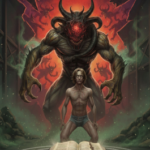
Robert Mendoza wanted to know if demons were real.
Tonight, in an abandoned warehouse on the edge of the Pasquotank Basin, he intends to find out. What he summons may be something far older — far worse...
The Dark Wire — What's Happening in Weird Fiction
Nightmare Magazine · Apr 15
Nightmare Magazine's April 2026 issue features A.C. Wise's “The Final Girl Trap,” a meta-horror investigation of what survival costs the psyche when the world refuses to stop grinding. The editorial argues that dark fiction serves as active resistance against forces that would reduce human experience to commerce — a position this readership will recognize as familiar ground.
Locus Online · Apr 21
Paula Guran's Locus review highlights Weird Horror #12 from Undertow Publications, praising Aliya Whiteley's “After the Last Night Comes the Rest of Your Life” — adolescents on the threshold of change, participating in a ritual sleepover at an abandoned amusement park. For readers invested in where the genre lives now, Undertow remains essential.
Locus Online · Apr 22
The 2026 Locus Awards top ten finalists have been announced, with the ceremony set for May 30 at Hotel Shattuck in Berkeley. Tananarive Due serves as guest of honor — a recognition that literary horror and dark speculative fiction occupy central ground in the genre's present and future.
Find Us in the Dark
Werewolf Winter on Social
Werewolf Winter · Literary Horror & Weird Fiction
© 2026 Lazo Consumer Products, LLC · Werewolf Winter Imprint
{unsubscription_url}
You are receiving this because you walked through the wrong door at the wrong hour.
Comments